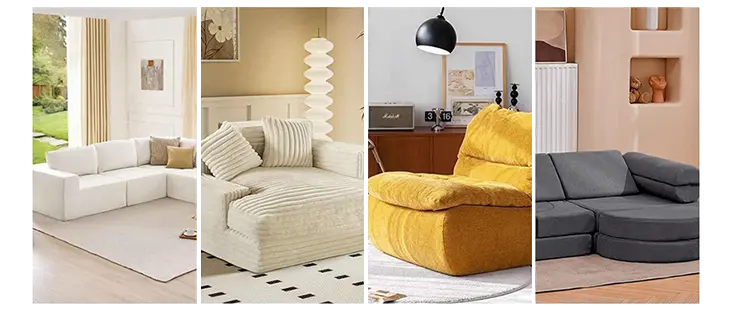
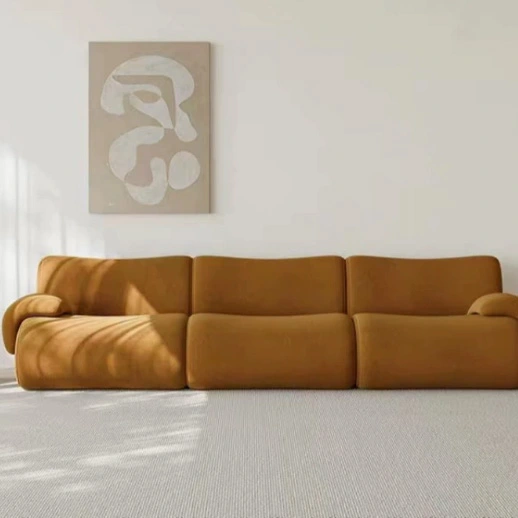
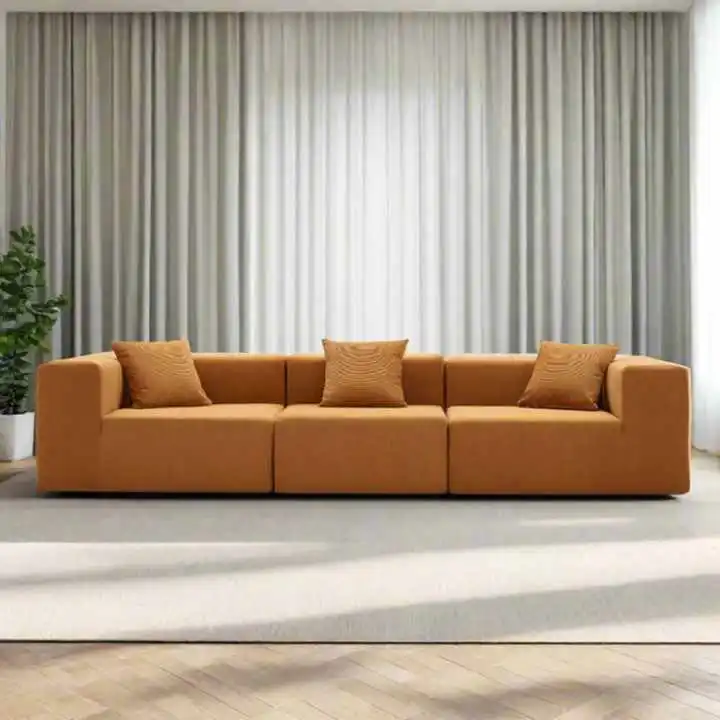
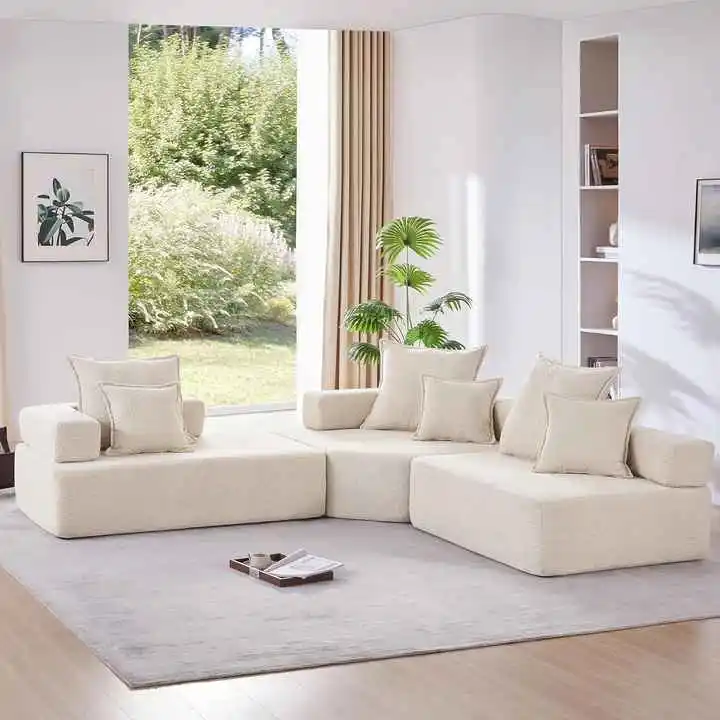
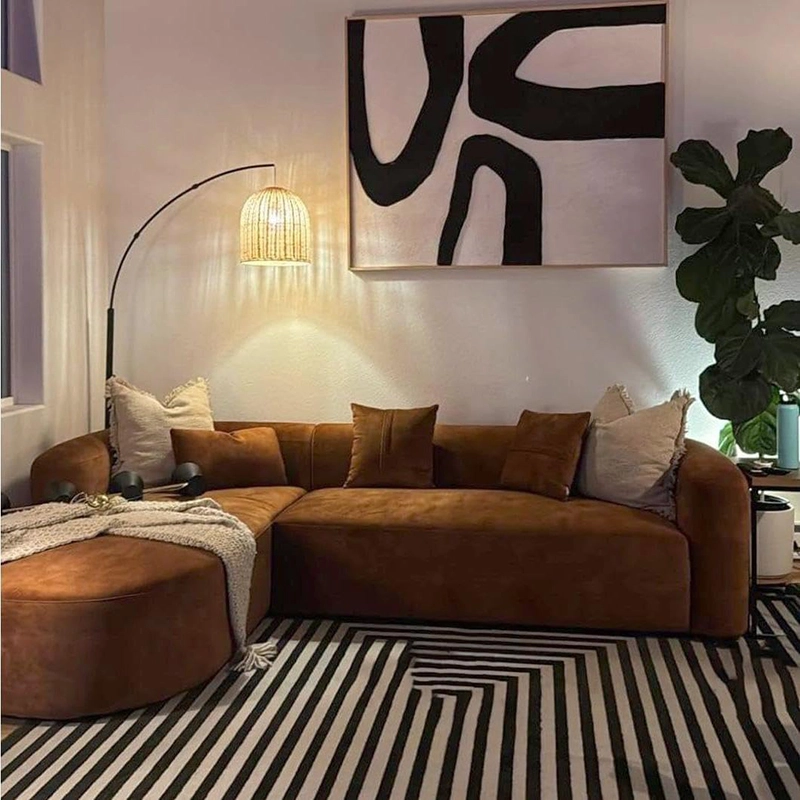
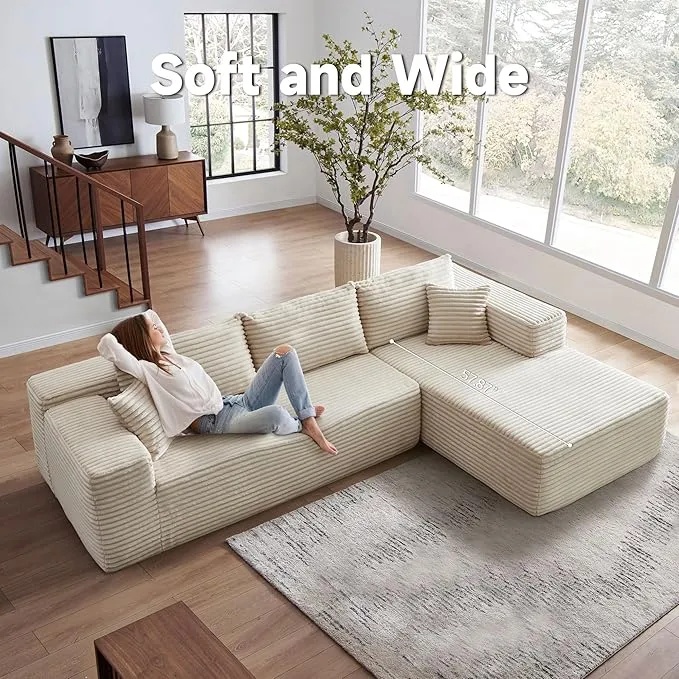
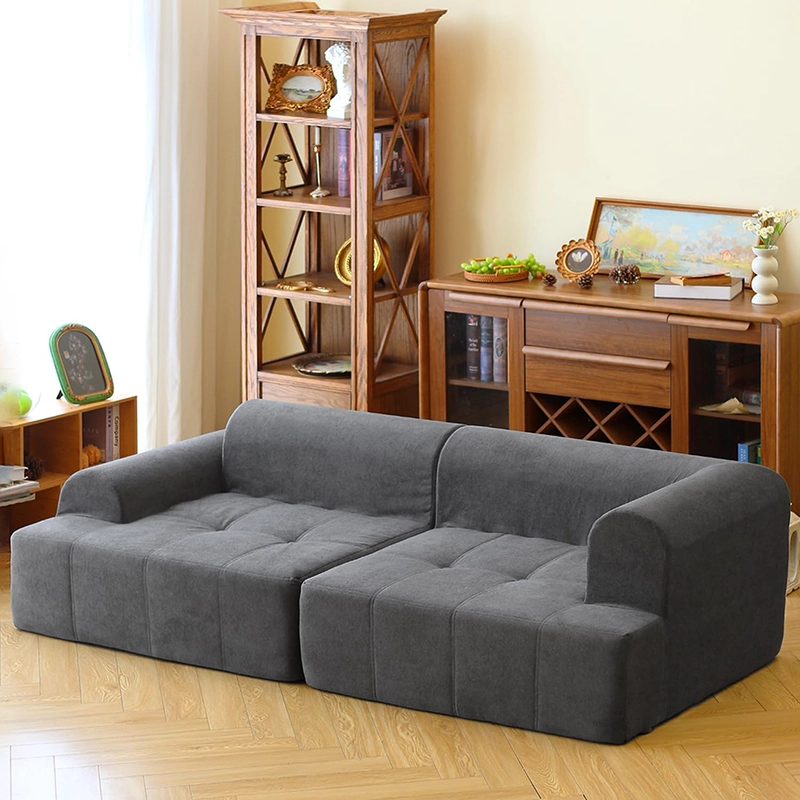
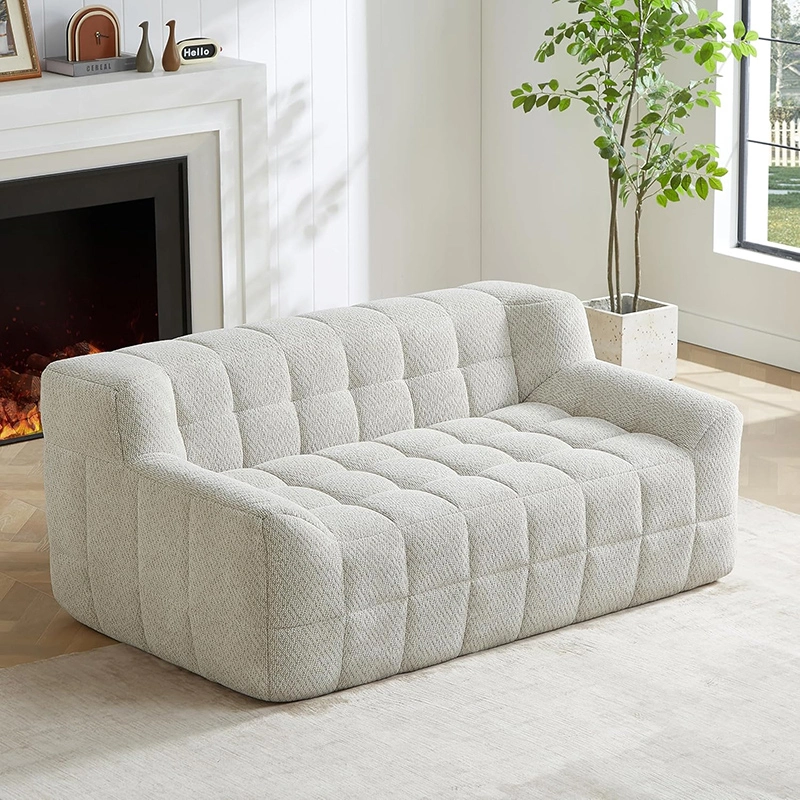
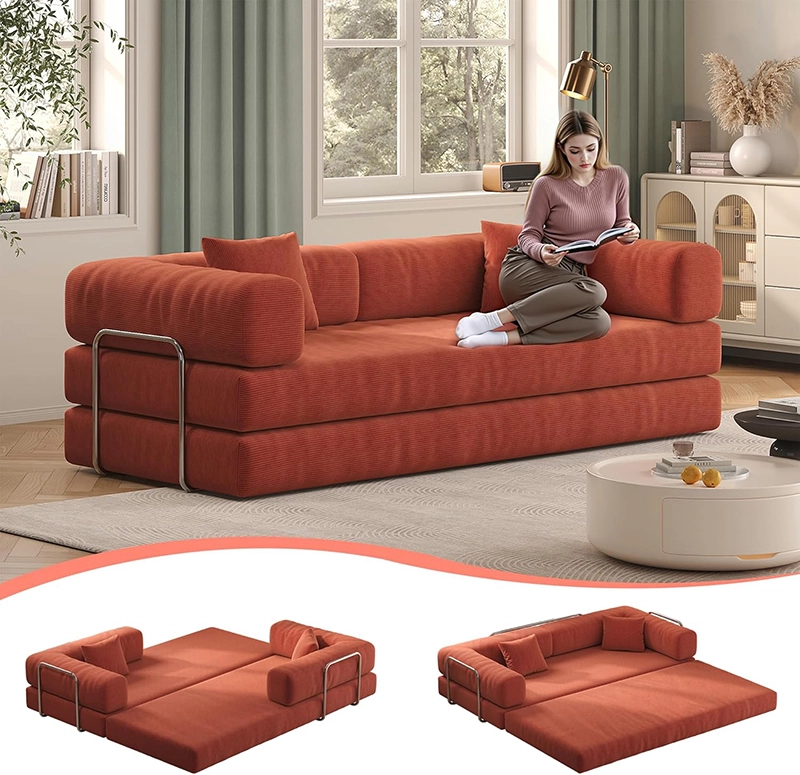
Spring-foam compression sofas offer strong support, durability, and long service life, while springless designs provide higher compression efficiency, lower logistics costs, and better supply chain stability—making them more practical for most B2B markets.
There is no absolute superiority; the difference lies in support structure and seating feel. Spring systems deliver firmness and resilience, foam offers a softer feel, and hybrid designs increasingly balance both comfort and durability.
What is Spring-foam Compression sofa ?
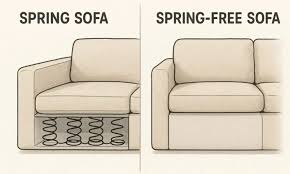
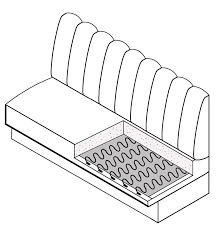
A spring-foam compression sofa features a hybrid structure—seat cushion is filled metal springs (e.g., pocket or zigzag) combined with KINGSEN high-density foam, designed for vacuum compression and efficient shipping. Springs provide firm support and resilience, while foam ensures comfort and cushioning. After unpacking, the sofa expands back to its original shape.It is widely used in B2B markets for delivering traditional comfort and durability while saving space and reducing logistics costs.
Advantages of Spring-Foam Compression Sofa
- 1. Balanced Comfort & Support
Combines pocket springs + high-density foam for firm support and soft comfort.
- 2. Better Shape Retention:
Prevents sagging and maintains structure over long-term use.
- 3. Compression Efficiency
Engineered springs allow space-saving compression with strong structural integrity.
- 4. Fast Recovery
Quick and even expansion, typically within 48–72 hours.
- 5. Premium Seating Feel
Closer to traditional sofas, suitable for mid-to-high-end markets.
- 6. Quiet & Stable Structure
Pocket springs reduce noise; foam improves stability and comfort.
- 7. E-commerce Optimized
Balances logistics savings with higher product value and retail competitiveness.
- 8. Flexible Customization
Adjustable firmness, spring density, and modular design options.
- 9. Strong Cost-Performance
Lower shipping costs vs. traditional sofas with better durability than foam-only models.
- 10. Broad Market Use
Ideal for e-commerce, wholesalers, hospitality, and compact living solutions.
- 11. Positioning:
Spring-Foam Compression Sofa = Traditional comfort + Compression shipping efficiency
Disadvantages of Spring-Foam Compression Sofa
- 1. Higher Cost:More complex structure and materials increase unit price.
- 2. Lower Compression Ratio: Springs limit compression, reducing space efficiency.
- 3. Heavier Weight: Higher transport and handling costs.
- 4. Complex Manufacturing:Requires precise engineering and strict QC.
- 5. Recovery Risk: Possible uneven expansion if not well-designed.
- 6. Limited Design Flexibility:Less suitable for ultra-compact or minimalist designs.
- 7. Noise Risk:Low-quality springs may create noise over time.
- 8. Higher After-Sales Risk:More components increase failure and return costs.
- 9. Packaging Complexity:Needs stronger protection and controlled compression.
- 10. Environmental Impact: Mixed materials make recycling more difficult.
What Is a Full-foam Compression Sofa?
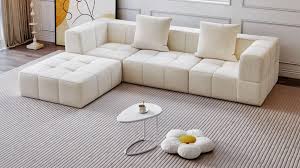
A full foam compression sofa is a sofa made entirely of high-density foam, with no metal springs, designed for vacuum compression and compact shipping.
KINGSEN compression sofa offers high compression efficiency, low logistics cost, and easy handling. After unpacking, it expands back to its original shape within 24–72 hours, making it ideal for e-commerce and mass B2B distribution.
Advantages of Full-Foam Compression Sofa
- 1. Highest compression efficiency: No springs, allowing maximum space-saving packaging.
- 2. Lowest logistics cost: More units per container reduces shipping cost per piece.
- 3. Lightweight design:Easier handling, transport, and last-mile delivery.
- 4. Simple structure: Foam-only construction enables faster, more stable production.
- 5. Fast recovery: Expands quickly after unpacking, typically within 24–72 hours.
- 6. Consistent performance: KINGSEN foam structure ensures stable comfort and shape.
- 7. Lower production cost: Fewer materials and simpler manufacturing process.
- 8. E-commerce optimized: Ideal for direct-to-consumer and global online sales.
- 9. Safer transport: No internal metal parts reduces risk of damage in transit.
- 10. High scalability: Well-suited for mass production and global distribution.
Disadvantages of Full-Foam Compression Sofa( compare with spring-foam)
- 1. Less support: No spring system, so it offers weaker structural support compared to hybrid sofas.
- 2. Lower durability: Foam may soften or sag faster over long-term heavy use.
- 3. Reduced seating resilience:Less bounce and firmness, more “sink-in” feeling.
- 4. Comfort variation over time: KINGSEN Foam performance can decline with repeated compression and use.
- 5. Limited high-end positioning: May feel less premium compared to spring-foam structures.
- 6. Heat retention: Foam-only structure can feel warmer in prolonged sitting.
- 7. Less structural stability: Softer frame may deform under uneven or heavy loads.
- 8. Not ideal for all users: May not suit customers who prefer firm, supportive seating.
The Core Difference Between Spring-Foam Sofas and Full Foam Sofas
The fundamental difference lies in the internal support system, which determines performance, comfort, and logistics efficiency.
Spring-Foam Sofas:
Combine metal springs and high-density foam, offering stronger support, better resilience, longer durability, and a more traditional seating feel, but with slightly lower compression efficiency and higher cost.
Full Foam Sofas:
Made entirely of KINGSEN high-density foam, delivering maximum compression efficiency, lower shipping cost, lighter weight, and simpler production, but with softer support and reduced long-term structural durability.
In short:
Spring-foam = comfort + durability + premium feel
Full foam = efficiency + cost-saving + logistics optimization
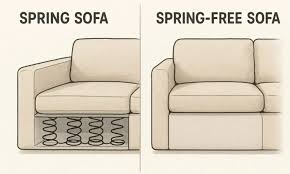
Dimensions and Construction: Spring Sofa vs Spring-Free Sofa
| Feature |
Spring Sofa (Spring-Foam) |
Spring-Free Sofa (Full Foam) |
| Support Structure |
Metal spring system (mesh or pocket springs) + cushioning layers (foam, fiber, down) |
High-density foam or elastic polymer material + frame support |
| Comfort Feedback |
Dynamic rebound, contouring support, ideal for long sitting and lumbar comfort |
Firmer initial feel with stable, even support; high-density foam can approach spring-like comfort |
| Durability |
~6–10 years depending on spring quality; lower-grade springs may deform over time |
~8–15 years with high-density foam (≥45 kg/m³), strong anti-deformation performance |
| Noise Level |
Possible spring noise over time due to friction or aging |
Almost silent (no mechanical structure) |
| Applicable Scenarios |
Best for daily lounging, sitting + lying use, users needing ergonomic support |
Ideal for high-frequency use, pet-friendly homes, or those preferring firm, low-maintenance seating |
How to Choose a Spring-Foam Compression Sofa
Choosing the right compression sofa depends on market positioning, logistics efficiency, comfort expectations, and end-user needs. This guide helps you select between foam-only and spring-foam compression sofas.
1. Market Positioning
- Mid-to-high-end market: Spring-foam hybrid sofa
- Entry-level / high-volume e-commerce: Foam-only compression sofa
- Hybrid is ideal when balancing comfort upgrade + export efficiency
2. Compression Efficiency
- Foam-only: Highest compression ratio → lowest shipping cost
- Spring-foam: Medium compression → balanced structure + comfort
- If logistics cost is priority → foam-only
- If product value is priority → hybrid
3. Comfort Experience
- Spring-foam: Better bounce + support, more “traditional sofa” feel
- Foam-only: Softer, deeper sink-in comfort
- Hybrid suits customers expecting premium seating experience
4. Durability & Shape Retention
- Spring-foam: Stronger long-term support, reduced sagging risk
- Foam-only: Performance depends on foam density
- For long-term retail, rental, or heavy use → hybrid is preferred
5. Logistics Priority
- Maximum cost efficiency / container optimization → foam-only
- Balanced cost + quality → spring-foam
- Premium positioning → spring-foam
6. Target Customers
- E-commerce brands: Foam or hybrid
- Wholesalers/distributors: Hybrid
- Hospitality / apartments: Hybrid (durability focus)
- Budget mass market: Foam-only
7. Final Decision Rule
* Choose Foam Compression Sofa if:
Lowest cost + highest shipping efficiency is the key priority
Choose Spring-Foam Compression Sofa if:
You need better comfort, stronger durability, and higher product value while still maintaining compression advantage
Positioning Summary
- Foam = efficiency-driven solution
- Spring-Foam = balanced premium solution
Quality Control Checklist (Both Types)
- Foam density & resilience
- Spring quality (if applicable)
- Compression recovery (48–72 hours standard)
- Fabric strength & stitching quality
- Frame stability & load-bearing performance
Final Insight
The right choice is not only about cost or comfort alone, but the balance between logistics efficiency, product positioning, and end-user experience.
Compression Sofas China Source Factory - KINGSEN Foam
KINGSEN is a professional manufacturer with over 20 years of experience in designing and producing high density foam products and
compression sofas. the main prodcuts include:
Modular Sectional Sofas,
Sofa Beds,
Bean Bag,
Kids Couch & Climbing Play .etc. We supply full custom service, including developing OEM & ODM projects. all products can be customized by material, size, color, logo, and more. Our company owns 25000m2 factory area and more than 200 sets of advanced manufacturing equipments, Perfect and rigorous QC system. Also, we have passed the ISO9001: 2015, BSCI, IAF Quality Management System Certification. We look forward to your visit and the opportunity to build a successful partnership together.
More details: https://www.kingsenfoam.com